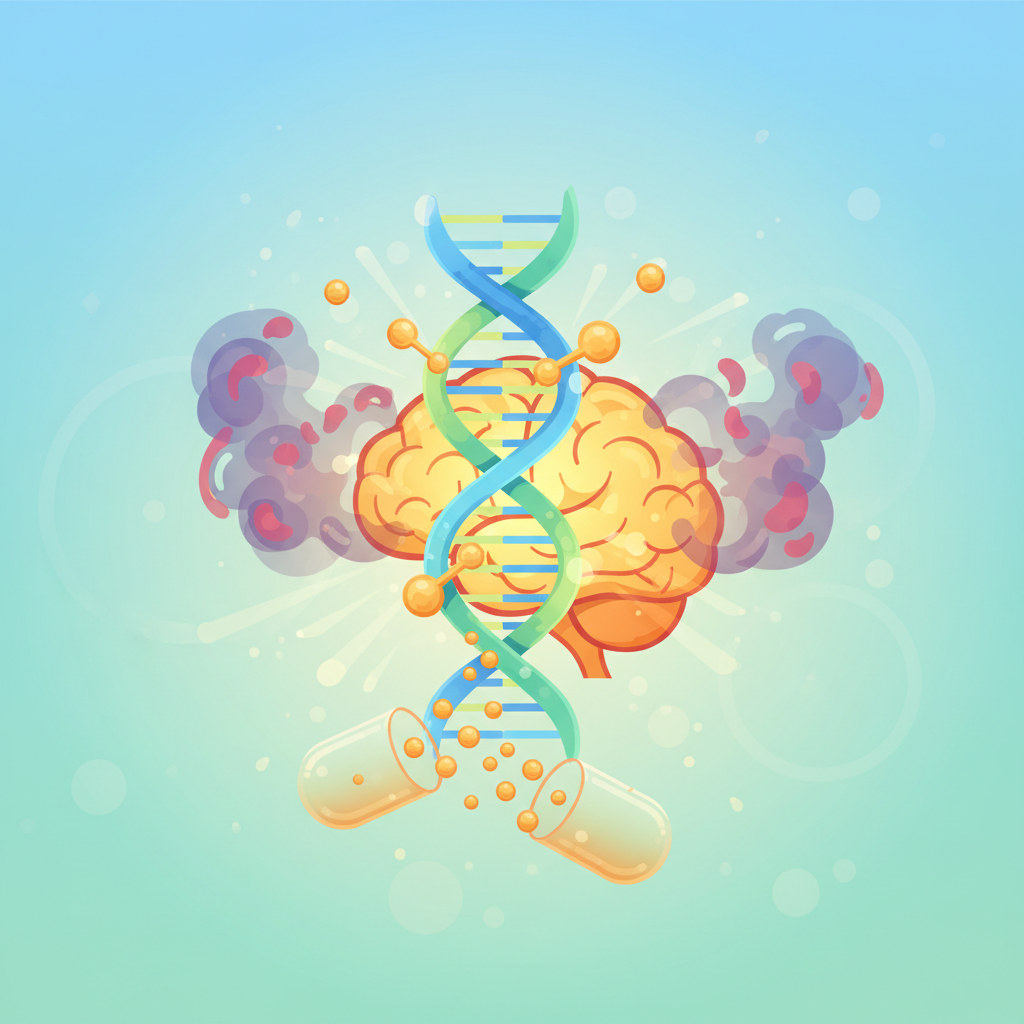
Exciting news emerges from King’s College London, where researchers have unveiled a compound, KCL-286, capable of significantly impacting the fight against Alzheimer’s disease. This innovative compound not only repairs DNA damage in brain neurons but also reduces inflammation, opening up new therapeutic perspectives.
How KCL-286 Works
The mechanism of action of KCL-286 is truly remarkable. It activates the natural DNA repair process through the BRCA1 protein, well-known for its role in genetic error repair. Additionally, the compound acts as an agonist for the RAR-β receptor, a key factor in regulating cellular processes.
Studies conducted on mice with Alzheimer’s demonstrated KCL-286’s ability to effectively repair DNA damage in neurons. Such damage is considered an important factor in the progression of the disease and associated brain dysfunction.
Reducing Inflammation and Abnormal Immunity
Beyond DNA repair, KCL-286 proved effective in reducing cerebral inflammation and abnormal immune activity in the brain. Chronic inflammation and an overactive immune system significantly contribute to neurodegeneration and the cognitive decline specific to Alzheimer’s disease. By ameliorating these processes, KCL-286 could potentially slow disease progression and protect nerve cells.
Published in the prestigious journal “Febs Open Bio,” these findings are of paramount importance. The fact that the substance has already passed phase 1 safety tests in humans significantly shortens the path to full clinical trials, bringing hope for more effective treatments for the millions affected by Alzheimer’s worldwide.
Did You Know…?
- What are the nerve cells in the brain called?The nerve cells in the brain and throughout the nervous system are called neurons.
- What does an ‘agonist’ mean in pharmacology?An agonist is a substance that binds to a cellular receptor and produces a biological effect, similar to that produced by a natural substance.