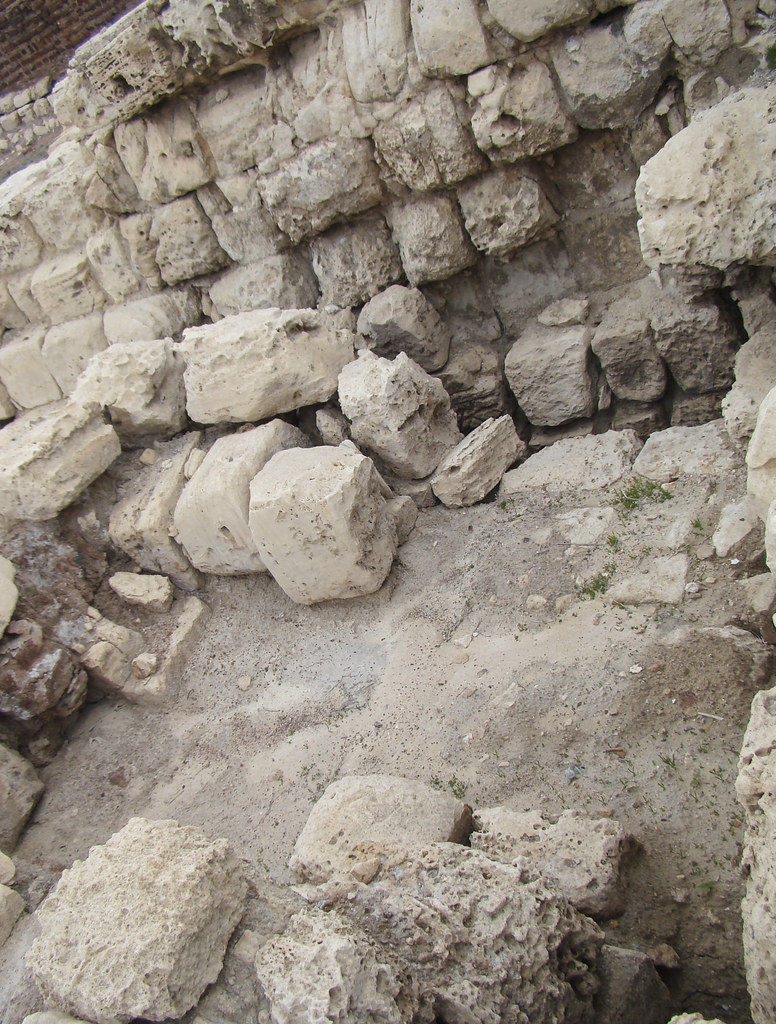
Ancient Rome consistently astounds us with its ingenious and durable constructions. A prime example is a 1,900-year-old latrine discovered at Hadrian’s Villa, which has provided researchers with invaluable insights into the legendary strength of Roman concrete. Recent studies suggest the secret to this material’s longevity might lie in its ability to “self-heal.”
The “Self-Healing” Mechanism: Carbonation
Research published in Science Advances identified carbonation as a key factor in the durability of Roman concrete. Essentially, this process involves carbon dioxide reacting with calcium hydroxide present in the cement, forming calcium carbonate. But how does this contribute to its strength?
Calcite, a Saving Mineral
The study, led by Xiaohong Zhu and Paulo Monteiro, analyzed concrete samples taken from the latrine at Tivoli. A crucial discovery was the presence of the mineral calcite, which fills cracks and pores within the concrete’s structure. Over centuries, as the carbonation process intensifies, calcite gradually deposits, effectively sealing any fissures that appear. This “self-healing” action makes Roman concrete less permeable and, consequently, more resistant to degradation over time.
Lessons from the Past for the Future
This astonishing ability of ancient concrete to repair itself offers new perspectives for developing more durable and environmentally friendly modern building materials. By understanding the mechanisms behind the resilience of Roman constructions, today’s engineers could create new types of concrete capable of standing the test of time just as well – or even better – than those built by our Roman ancestors.
Did you know…?
- What is carbonation in concrete? It is a chemical process where carbon dioxide from the atmosphere reacts with calcium hydroxide in the cement to form calcium carbonate, a more stable compound.
- How does this help with durability? The calcium carbonate, in the form of calcite, fills micro-cracks and pores in the concrete, sealing it and preventing the ingress of water and other degrading agents.