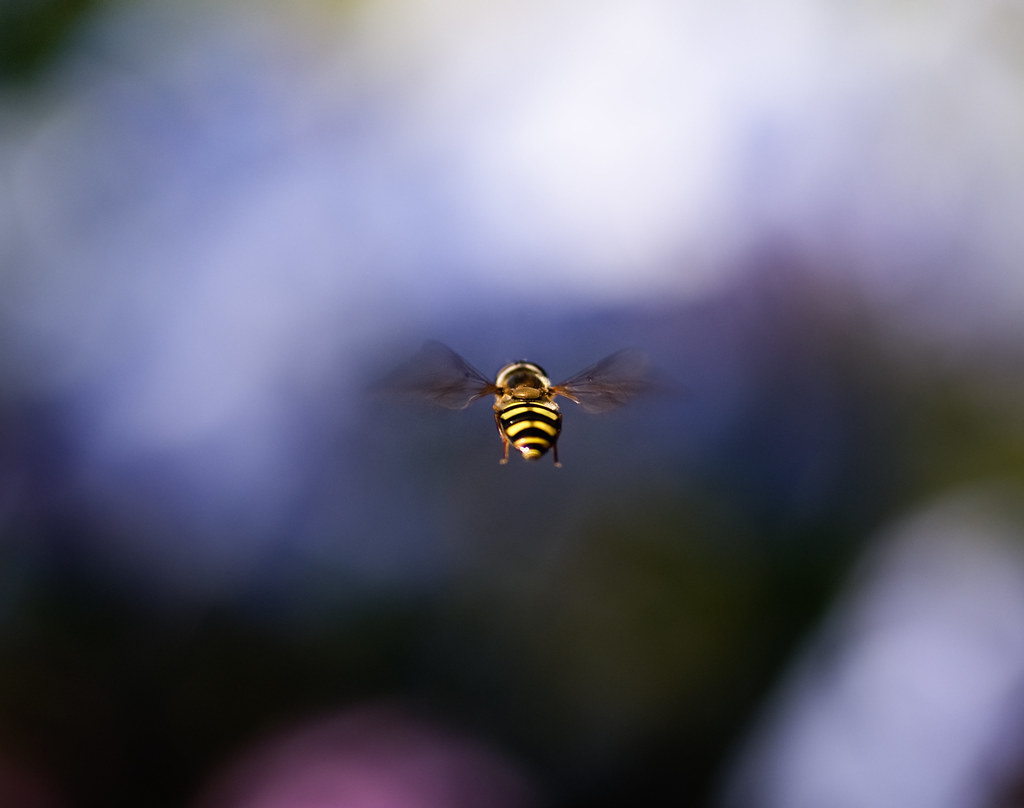
Have you ever seen a dog ‘licking its lips’ after a delicious snack? Well, it turns out that bumblebees (Bombus terrestris) do something similar, and this could change how we view the inner world of these delicate insects.
A fascinating study, published in the prestigious journal Proceedings of the National Academy of Sciences, reveals that bumblebees display complex taste reactions that could indicate an affective evaluation – a rudimentary form of ‘feelings’ – rather than just robotic feeding reflexes.
Sweet and Bitter Reactions
The researchers, including Fei Peng from Southern Medical University in China and Cwyn Solvi, along with Andrew Barron from Macquarie University, carefully observed the bumblebees’ behavior. They repeatedly extended and retracted their tongues (glossa) after consuming sugary liquids. Scientists interpreted this gesture as akin to the ‘lip-licking’ observed in mammals, a clear sign of appreciation.
Conversely, when exposed to bitter or salty tastes, the bumblebees exhibited aversive reactions. They began shaking their heads and wiping their mouths, behaviors that clearly suggest displeasure and a rejection of the taste. These actions go far beyond simple reflexes of food acceptance or refusal.
Beyond Instinct: Feelings of ‘Liking’ and ‘Wanting’
The study’s findings are intriguing because they demonstrate a distinction between ‘liking’ and ‘wanting’ in bumblebees. This differentiation indicates an affective evaluation of their environment, suggesting that bumblebees do not just react according to a strict predetermined program, but that their experiences are accompanied by a certain form of subjectivity. They process taste information not only on a nutritional level but also on a level that involves a form of ‘appreciation’ or ‘aversion’.
This raises important questions about the consciousness and inner lives of insects, broadening the discussion about the intelligence and complexity of the animal kingdom.
Did you know…?
- Q: What is the role of the glossa in bumblebees?
- A: The glossa is the bumblebee’s tongue, used to extract nectar from flowers.
- Q: What do aversive behaviors in bumblebees suggest?
- A: They indicate a reaction of displeasure or rejection towards certain tastes, demonstrating a negative evaluation of them.