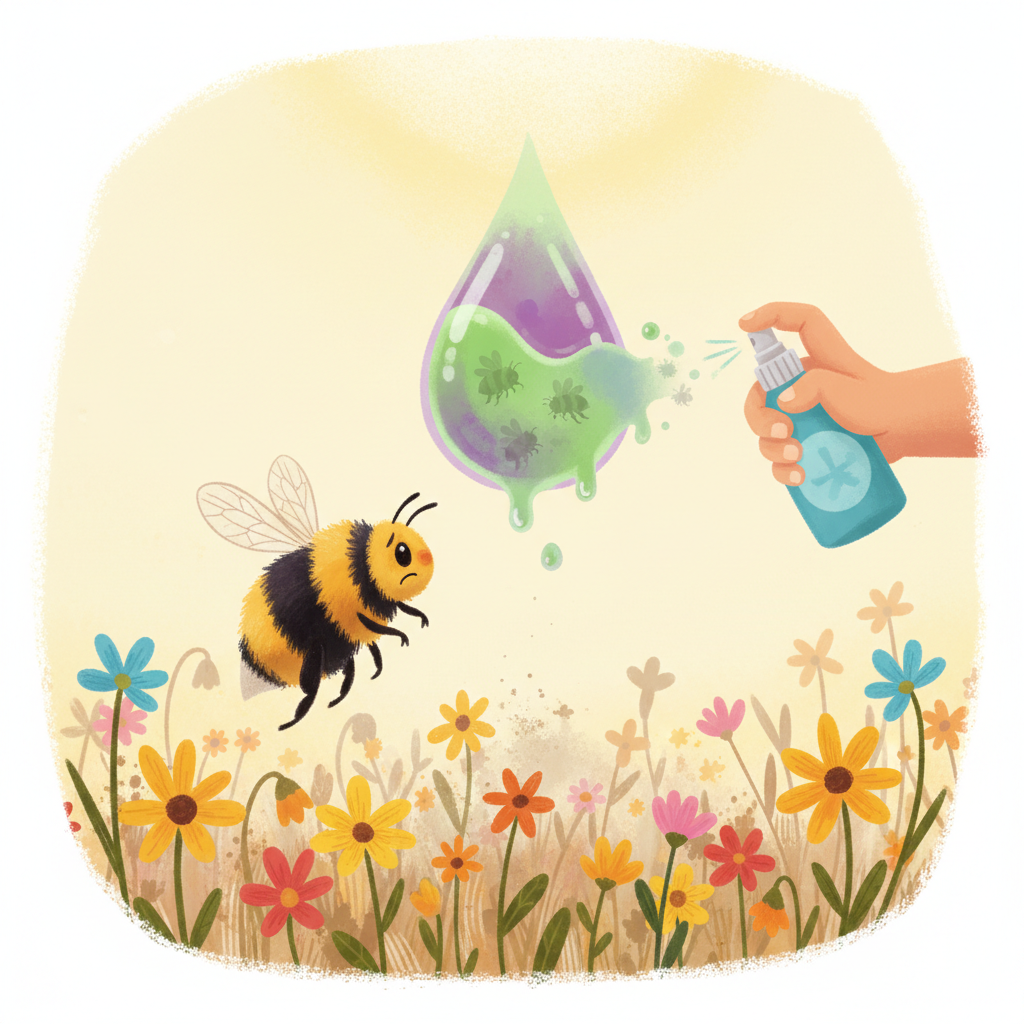
The Invisible Threat in Your Garden
New generations of pesticides, designed for increased effectiveness, can harbor unexpected dangers. A recent study conducted at the Georgia Institute of Technology, funded by the USDA and published in Ecotoxicology and Environmental Safety in 2026, raises a serious alarm. Researchers discovered that sulfoxaflor, a common new-generation pesticide, imperils the reproductive health of bumblebees.
This chemical, even in low doses, has a profound genetic impact. It alters gene activity, particularly in the ovarian tissues of bumblebees, leading to a significant reduction in offspring numbers. Imagine a future where these essential creatures gradually vanish, without us directly noticing the reasons for their decline. This could lead to a “silent extinction” of future bumblebee generations.
Impact on Reproductive System
Genetic analysis revealed that exposure to sulfoxaflor is not just a momentary problem. The genetic and functional changes induced by this pesticide are potent enough to contribute to a long-term decline in bumblebee populations. This is not just a local issue; it has serious implications for global ecosystems, given the crucial role of bumblebees in pollination.
The research underscores the need for increased attention to the impact of agricultural chemicals on wildlife. While these pesticides are formulated to be effective against pests, their side effects on beneficial species, such as bumblebees, can have far broader and irreversible consequences.
A Future Without Bumblebees?
If the trend continues, we could witness a significant loss of biodiversity and the ecosystem services provided by bumblebees. The study urges us to re-evaluate how we use pesticides and to seek safer alternatives that protect essential pollinators for the health of our planet.